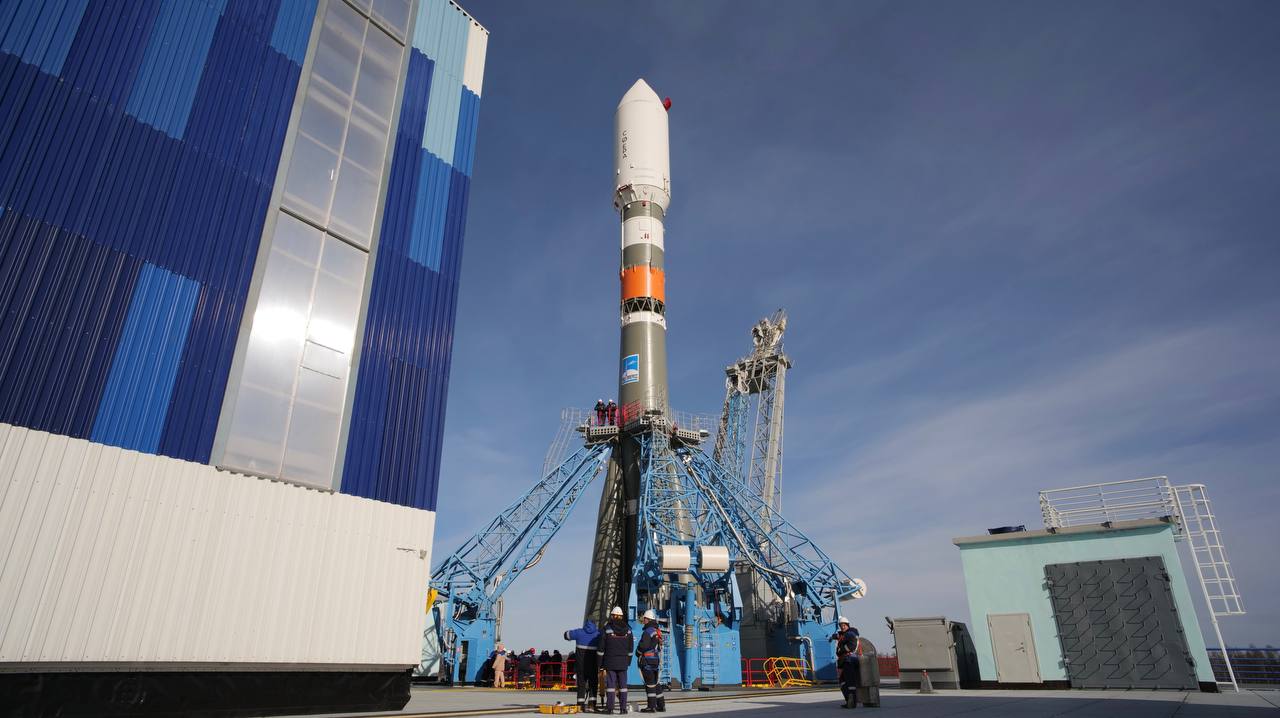
Russian Federal Space Agency (ROSCOSMOS)
Russia Quietly Firing Up 16 Mystery Internet Sats in 2026
Target NET
7/19/2026, 5:51:00 PM
Launch Site
43/4 (43R)
Rocket Configuration
Soyuz 2.1b
Mission Overview
The Soyuz 2.1b Rassvet-3 launch date targets May 2026 from Plesetsk with 16 stealth broadband birds for Russia. Cold pad, hot rocket, polar orbit jump.
Mission Details & Analysis
Frost Hissing off the Plesetsk Rail
The Soyuz 2.1b Rassvet-3 launch date slips into late May 2026. Fuel lines burp white. Sixteen Rassvet-3 cabins wait behind the fairing. No fanfare. Just polar silence and voltage.
Russia does not beg for attention. It lights the fuse and watches the arc. Broadband for the boreal edge is the quiet payoff.
RD-107 Pulse, Cold War Bones
Soyuz 2.1b keeps old theater and new nerves. Four boosters wrap around a center core like winter branches. RD-107A engines still run on raw kerosene and chilled oxygen. No sparklers. Just thrust that tastes like iron.
ROSCOSMOS lets the hardware speak. Success records blur. The flight profile stays simple: loft, turn, drop. The third stage will carve a path nobody else wants—straight over the pole. No equator hugs here.
Sixteen Birds, One Bureau, Thin Air
Byuro-1440 never brags. Its 16 Rassvet-3 satellites slot into polar orbit to stitch signals across Russian permafrost and taiga. Latency drops when the ground is cold and the beam is straight. Launch site secrecy is not paranoia. It is habit.
Fairing halves will crack open at altitude and breathe their payloads into vacuum. No speeches. Just clocks syncing and beams hunting for rooftops that never show on glossy maps. Winter constellations do not glitter. They work.