Blue Origin
BlueBird 7 Awakens: New Glenn Will Rewrite Broadband
Target NET
4/19/2026, 11:25:00 AM
Launch Site
Launch Complex 36A
Rocket Configuration
New Glenn
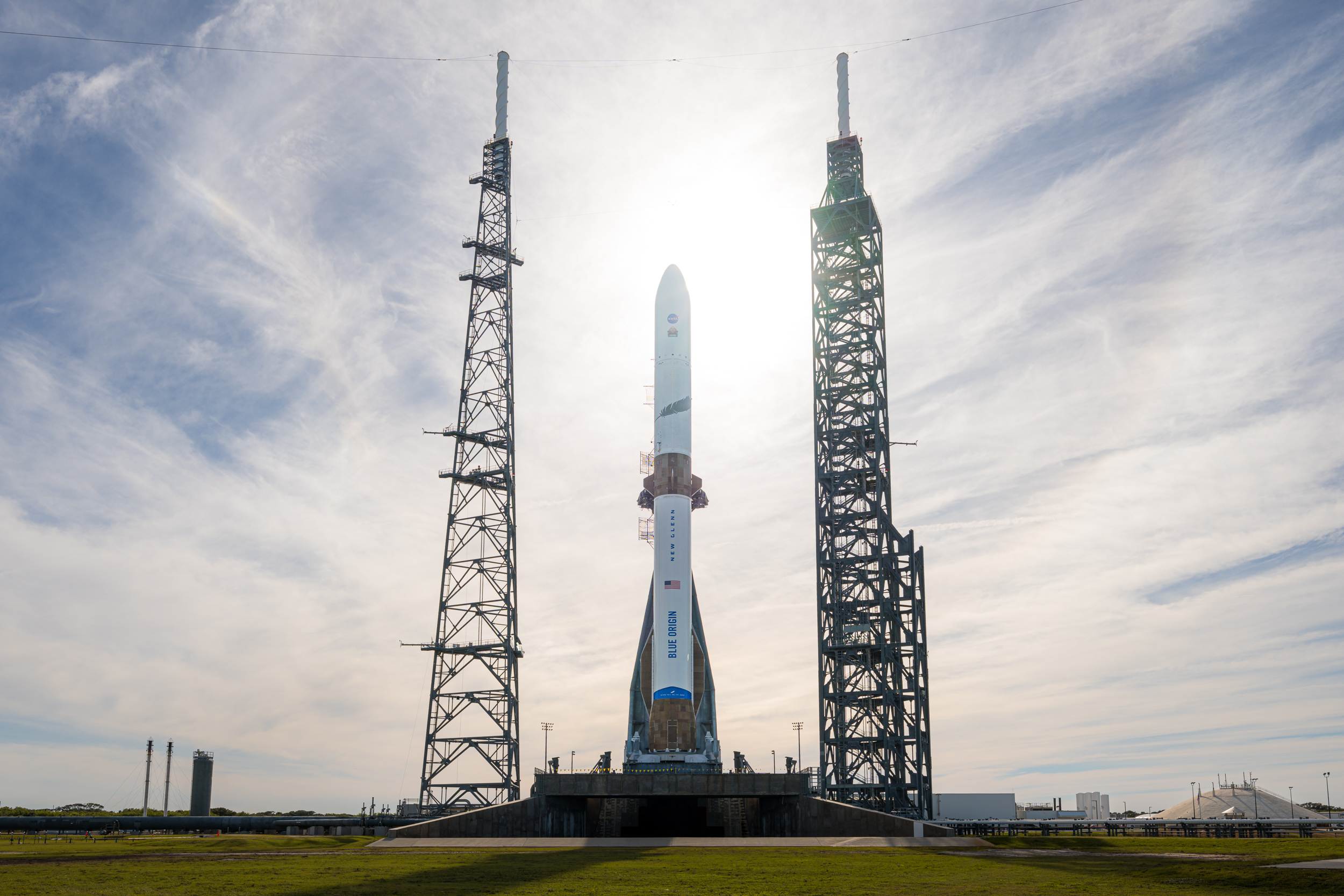
T-minus ignition. The pad shudders. LC-36A has seen decades of hope scorch into vapor. Now New Glenn BlueBird Block 2 launch date arrives with brutal clarity. One booster. One bus-sized miracle. BlueBird 7 unfurls a wing larger than a basketball court and dares physics to complain.
Thick cloud layers roll in. Cumulus rules bite. Weather claws. The clock stops. Then starts. This is not a parade. It is a siege against mediocrity.
Blue Origin staggers under a record stripped of victory tallies. No glossy launch cadence. No fanfare. Just cold math and heavier ambitions. New Glenn rises with hydrolox calm and steel-cage discipline. Two solids die in the Atlantic. The center core snarls toward orbit. Fairings crack like ice. The mission tolerates no margin for theater.
AST SpaceMobile’s bird carries arrays stretching twenty-four hundred square feet—monsters that will own Low Earth Orbit scale. Voice, video, torrential data. Up to 120 Mbps beamed down. Up to 40 MHz channels chewing through congestion. This is broadband with delusion removed.
Block 2 crushes Block 1 by an order of magnitude. Continuous coverage is promised without apology. Beams slice across the United States while ground terminals sip watts. Latency flattens. Signals punch through buildings and storms and stubborn myths about rural dead zones. The satellite separates—or it does not. Space grants no participation trophies.
Cape storms may win tonight. They have before. But the stack stands. Engines ready. Tanks full. Control rooms silent. When New Glenn finally leaps, LEO will host the largest commercial array ever deployed—and broadband will never look small again.