SpaceX
Falcon Heavy to Launch NASA's Roman Telescope in 2026
Target NET
8/30/2026, 11:20:00 AM
Launch Site
Launch Complex 39A
Rocket Configuration
Falcon Heavy
Mission Overview
SpaceX Falcon Heavy Roman Telescope launch: Get ready for the most powerful space telescope ever. NASA's Roman mission aims to unlock dark energy secrets.
Mission Details & Analysis
Falcon Heavy: The Beast Before the Mission
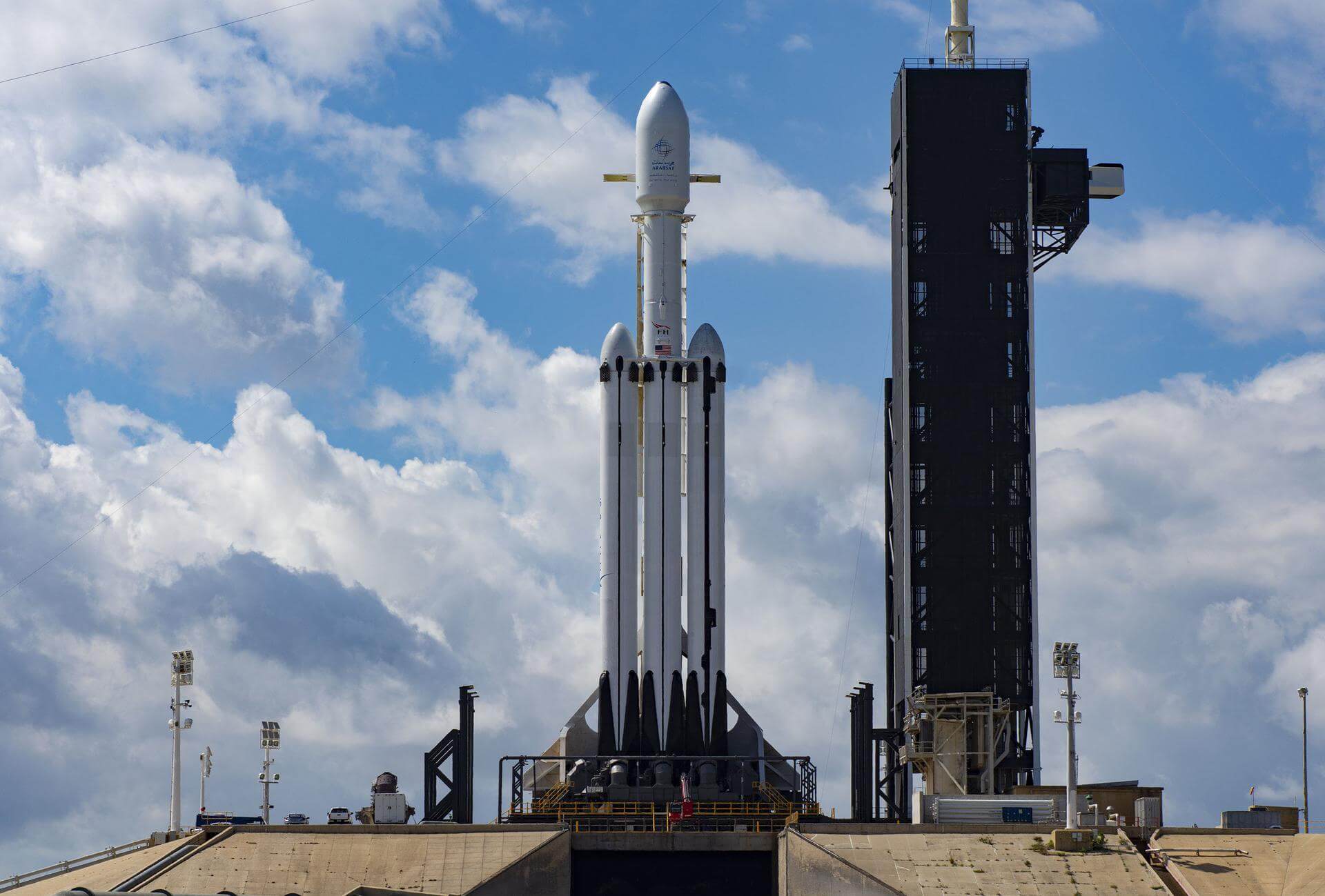
SpaceX Falcon Heavy Roman Telescope launch is just around the corner—mark your calendars for August 31, 2026. This isn't just any launch. It's the moment when the most powerful operational rocket in the world will carry NASA's Nancy Grace Roman Space Telescope toward its destiny at the Sun-Earth L2 point. The Falcon Heavy, with its 27 Merlin engines and thrust comparable to 18 Boeing 747s, stands ready to propel humanity's next great astrophysical breakthrough.
Imagine this: three Falcon 9 cores strapped together, generating more than 5 million pounds of thrust at liftoff. Yet for all its brute force, the Falcon Heavy has a precision that belies its size. SpaceX's track record with this rocket has been nothing short of spectacular—from launching Elon Musk's Tesla Roadster into orbit to deploying numerous satellites and even sending Arabsat-6A into a perfect geostationary transfer orbit. Each mission builds on the last, refining the reusability that has revolutionized space economics.
Kennedy's Legacy: Launch Complex 39A Awakens
Launch Complex 39A, Kennedy Space Center. This hallowed ground has witnessed history since the Apollo era. It's the same pad where Saturn V rockets lifted off for the Moon. Now, decades later, it's being prepared for the Falcon Heavy Roman Telescope launch. The pad's infrastructure—originally built for the Space Shuttle—has been retrofitted to accommodate SpaceX's heavy-lift rocket. Think about that: the same concrete that once supported the Shuttle's immense weight will now bear the Falcon Heavy.
The site has evolved over the years. After the Shuttle program ended, SpaceX leased and extensively modified the facility. They added flame trenches, installed new gantries, and integrated their own launch control systems. Yet they preserved much of the original structure—a nod to the pad's storied past. When the Falcon Heavy lifts off from 39A, it'll be continuing a legacy that began with Apollo, endured through the Shuttle, and now enters a new commercial space age.
The Roman Telescope: Peering into Cosmic Darkness
Nancy Grace Roman isn't just another space telescope. It's a game-changer. With its 2.4-meter mirror—same size as Hubble's—Roman captures a field of view 100 times larger. That's like switching from a telephoto lens to a wide-angle with the same resolution. The Wide-Field Instrument packs 300.8 megapixels across visible and near-infrared bands. This isn't just about pretty pictures—it's about mapping the universe in unprecedented detail.
But Roman's true power lies in its mission: probing dark energy and the expansion history of our cosmos. The telescope will use gravitational microlensing to hunt for exoplanets—detecting them by the way their stars bend light as they pass in front. Then there's the Coronagraphic Instrument, a technological marvel that suppresses starlight to directly image planets orbiting other stars. It's a direct assault on some of astronomy's biggest mysteries.
The implications are staggering. Roman could fundamentally change our understanding of dark energy—the mysterious force accelerating the universe's expansion. It might even test Einstein's general relativity on cosmic scales or reveal evidence of spacetime curvature. This isn't just science—it's philosophy made physical. The Falcon Heavy Roman Telescope launch will carry humanity's deepest questions about our cosmic existence to the edge of the observable universe.