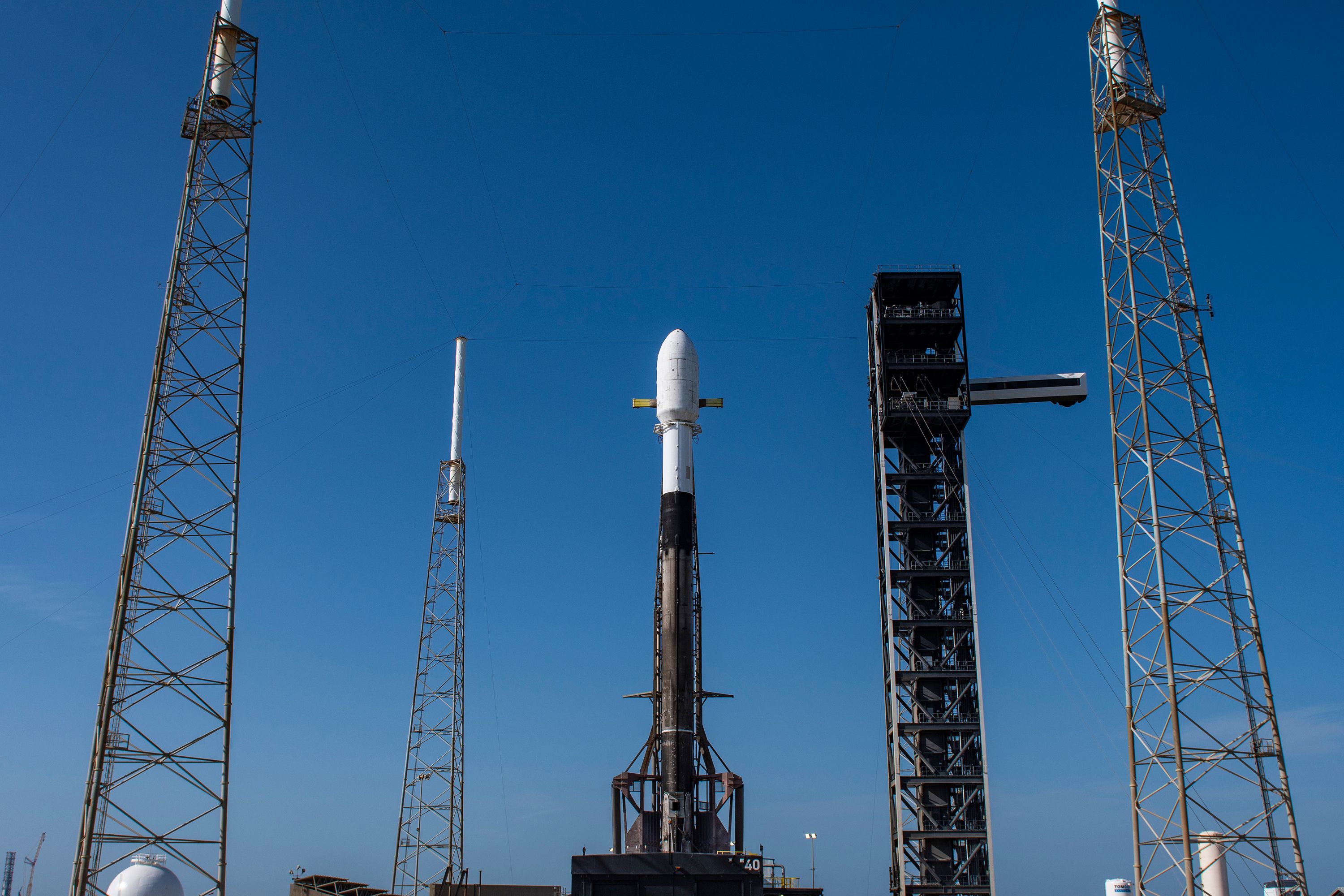
Cape Canaveral Pad Hides Midnight Surge
Falcon 9 MRV-1 launch date 2026 locks on June 30. Midnight air. Salt fog. The booster sits quiet while SpaceLogistics stacks a mission robotic vehicle and pods meant to nurse dying satellites back to life. No fanfare. Just transfer-orbit math and cold helium waiting to move.
Seconds bleed into minutes. The pad exhales. This is not a demo. It is a contract with physics. One long arc to geostationary transfer where the MRV will dock, push, and extend what ground crews cannot reach.
Block 5 Forgets How to Hesitate
Falcon 9 Block 5 burns with the kind of repetition that kills superstition. Titanium grid fins. RP-1 chilled to shrink and bite. Merlin throats tuned for throttle gymnastics. The family is Falcon but the discipline is all SpaceX—wring it, reuse it, fly it again. Fairing halves whisper during descent. Droneship lights blink like taunts.
Guidance never apologizes. It corrects. By the time second ignition settles, the stack is hauling a mission extension payload through the van Allen lashes. No ceremony survives orbit. Only margins do.
Independent Mission Stitches New Lifespans
No agency script. No program ribbon. Just SpaceLogistics slipping multiple mission extension pods into the trunk and telling old birds to wake up. Geostationary transfer is a cruel neighborhood. Radiation boils circuits. Fuel shrinks like regret. The MRV carries tools, torque, and certainty. It arrives late, works fast, and refuses to leave room for error.
Cape Canaveral will forget the sound by dawn. The satellite it saved will not. June 30 is not a date. It is a pivot.