Arianespace
Ariane 64 MTG-I2 Storms Sky—June 2026 Countdown Begins
Target NET
8/27/2026, 12:00:00 AM
Launch Site
Ariane Launch Area 4
Rocket Configuration
Ariane 62
Mission Overview
The Ariane 64 MTG-I2 launch date 2026 is locked for June 30 from French Guiana. EUMETSAT’s next-gen weather eye rides Europe’s newest heavy lifter into wild skies.
Mission Details & Analysis
French Guiana Ignites at Midnight
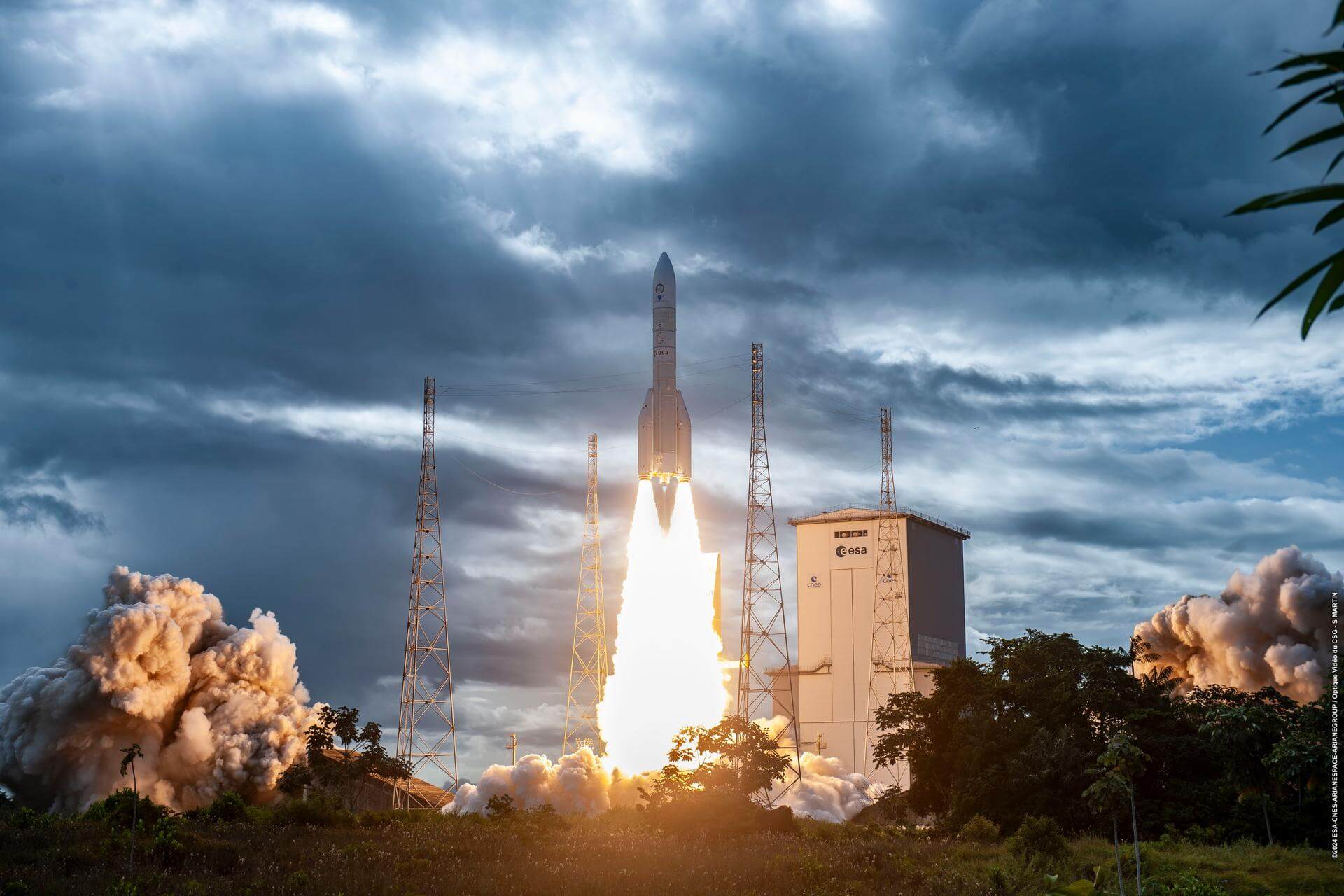
T-minus hours. Steam hisses off blackened rails at Ariane Launch Area 4. The Ariane 64 MTG-I2 launch date 2026 is real—June 30, 00:00 UTC. No rehearsals left. This heavy lifter will haul EUMETSAT’s third-generation weather sentinel through salt-thick air toward a Geostationary Transfer Orbit. Silence never lived here.
Concrete trembles. Europe’s newest ride flexes muscles older than its critics. Four solids bark. One core burns clean. The sky breaks open.
Ariane 64 Tears Up the Playbook
Two massive solid boosters hug a hydrogen-hungry core. No legacy bloat. No theater. Just thrust that arrives fast and sticks around. Arianespace knows pressure—flights either hold or vanish into ocean. This one must thread weather windows tighter than before. Geostationary Transfer Orbit asks for precision, not promises.
Guidance computers hum in a language of risk and radians. By the time MTG-I2 separates, the rocket will have rewritten its own reputation—or buried it.
Earth Science Waits in the Cold
MTG-I2 is the third of a sharper, faster weather fleet. Lightning, storms, ash clouds—Europe will see them sooner. Data will flow like revenge against surprise. Orbit insertion must be ruthless. One wrong tick and the satellite drifts into uselessness. French Guiana’s night air will remember the burn even if we forget the numbers.